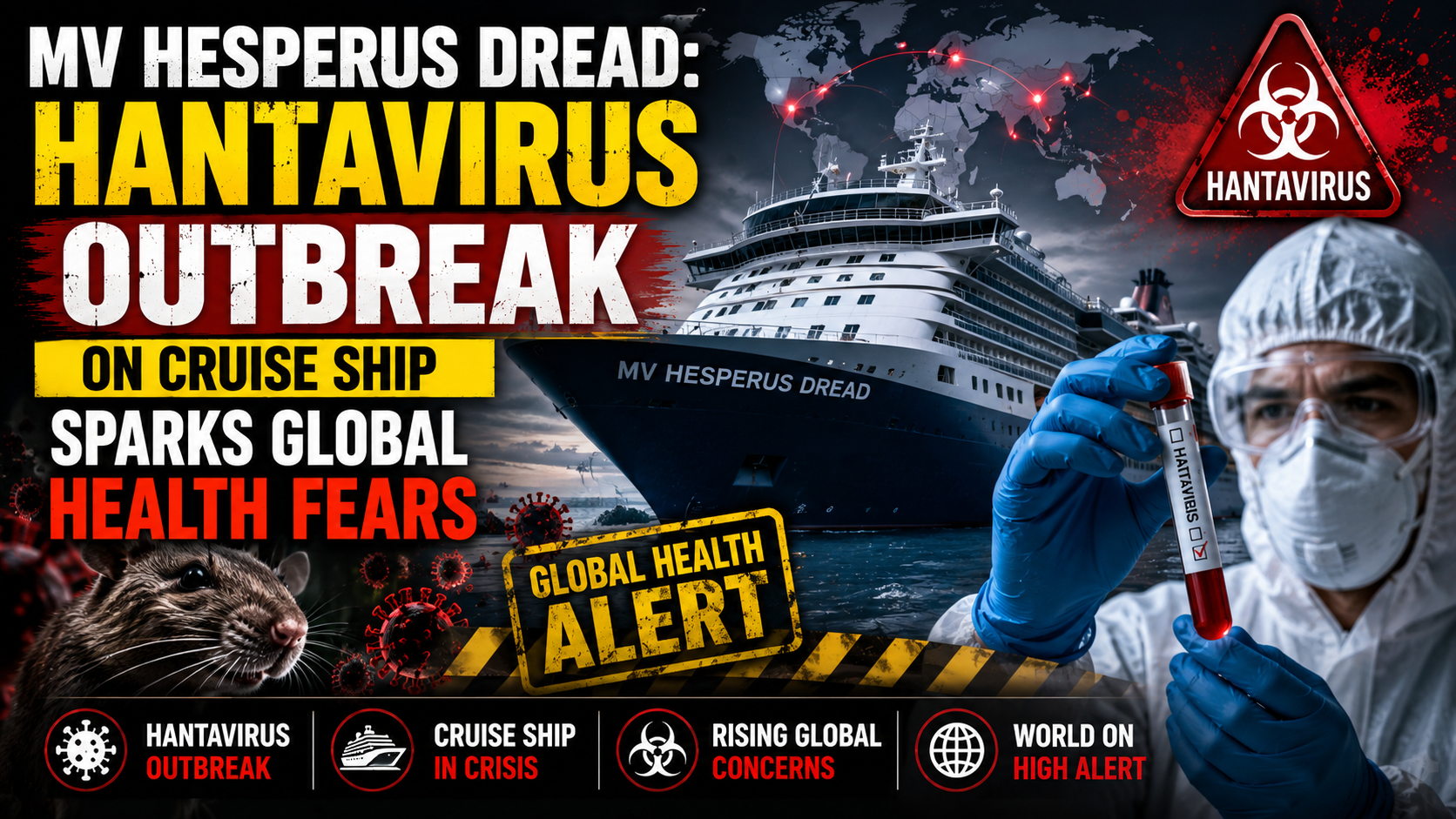
MV Hesperus Dread: Hantavirus Outbreak on Cruise Ship Sparks Global Health Fears:- A cruise ship is currently floating in the Atlantic, and the people on board are terrified. The MV Hadyus is anchored near the Canary Islands, MV Hesperus Dread hantavirus outbreak, but Spain is hesitant to let it dock. There are 150 passengers on board, and a deadly illness is spreading through the decks. Eight people have fallen sick, and four have already died. This isn’t just a medical emergency; MV Hesperus Dread hantavirus outbreak it’s a situation that feels like a nightmare from the middle ages.
The world is watching this ship with a sense of dread. It reminds us of the “death ships” from centuries ago that brought plagues to European ports. One wrong move could turn a localized outbreak into a wider crisis. The World Health Organization (WHO) is now involved to track the virus and stop it from reaching the mainland.
The MV Hesperus Voyage and the Fatal Infection Timeline
The MV Hadyus is a Dutch expedition cruise ship. These ships take wealthy travelers to remote places where normal tourists don’t go. This particular trip started on March 20th in Ushuaia, Argentina. The ship was headed toward the Canary Islands in Spain, passing through some of the most isolated waters on Earth.
The journey turned deadly fairly quickly. Between South Georgia and St. Helena, a Dutch man developed a fever and loose motions. He died on the ship around April 11th. This was the first sign that something was very wrong on board.
The situation worsened as the ship moved north:
- The deceased man’s wife was evacuated at St. Helena and sent to South Africa for care. She died on April 26th.
- A British national became severely ill near Ascension Island. He was rushed to an ICU in South Africa but died shortly after.
- A German woman showed similar symptoms as the ship approached Cape Verde.
Now, the ship sits in the water, and passengers are trapped. They’ve been sailing for seven weeks. The fear is palpable because the symptoms are consistent: high fever, breathing trouble, and kidney failure.
Understanding Hantavirus: Symptoms, Transmission, and Mortality
After the passengers were evacuated to South African hospitals, doctors found something strange. The patients had no typical infections. However, their lungs and kidneys were failing. This led to the diagnosis of Hantavirus.
Hantavirus isn’t a new discovery. It’s been around for a long time. In the 1950s, during the Korean War, thousands of soldiers got sick with what they called Korean Hemorrhagic Fever. It was named Hantavirus after the Hantan River in Korea.
You can’t catch this virus from another person like you do with a cold or COVID-19. It doesn’t spread through the air between humans. Instead, it comes from rodents like rats and mice. Humans get infected when they touch or breathe in dust contaminated with rodent urine, droppings, or saliva.
The symptoms often start like a bad flu:
- High fever and chills.
- Severe muscle aches.
- Intense headaches.
- Stomach pain and vomiting.
Once the virus hits the lungs or kidneys, it becomes lethal. Some strains of this virus have a mortality rate as high as 33%. That means one out of every three people who get it could die.
The Echo of the Black Death: Why Hantavirus Revives Ancient Fears
The panic around the MV Hadyus comes from a dark place in history. In 1347, ships docked in Messina, Italy, carrying sailors who were either dead or dying. These ships were infested with rats. Those rats carried fleas that spread the Bubonic Plague, also known as the Black Death.
That single event triggered a pandemic that killed about one-third of Europe’s population. Millions of people died. Cities were overwhelmed, and people began burying the dead in massive common graves.
This history is why we have the word “quarantine.” It comes from the Italian “quaranta giorni,” meaning 40 days. Ships were forced to wait offshore for 40 days to make sure they weren’t carrying the plague. The current standoff with the MV Hadyus is a modern version of this same fear.
The risk feels higher now because many passengers are European. The UK Prime Minister even issued a statement about protecting British nationals on the ship. When a head of state gets involved, you know the government is worried about a public health breach.
Containment and Current Status: WHO Protocols and Way Forward
The WHO believes the specific strain on this ship is the Andes Virus. This virus is common in South America, specifically in Argentina and Chile. Since the trip started in Argentina, it’s likely the infected passengers brought the virus on board.
The biggest problem is that there is no cure. There is no specific antiviral drug to kill Hantavirus. Doctors can only provide supportive care. If a patient can’t breathe, they get oxygen. If their kidneys fail, they get dialysis. The goal is to keep the patient alive long enough for their own body to fight the virus.
For those living elsewhere, there is some good news. There are currently no reported cases of Hantavirus in India. Because it doesn’t spread from human to human, the risk of a global pandemic is low. As long as the infected animals are managed, the virus stays contained.
Conclusion
The situation on the MV Hadyus is a stark reminder of how fragile our health can be. A luxury vacation turned into a floating hospital because of a rodent-borne virus. We’ve seen how Hantavirus can cause rapid organ failure and why the WHO is treating this with such caution.
The link to the Black Death shows that while medicine has improved, the way viruses travel hasn’t changed. Ships and planes can move a pathogen across the ocean in days. Vigilance and quick quarantine are still our best tools.
To protect yourself from similar rodent-borne illnesses, keep your living spaces clean. Seal holes where mice can enter. Always wear a mask when cleaning old sheds or dusty areas where rats might have lived. Staying aware of these risks is the best way to ensure that history doesn’t repeat itself.